


Benefits of Trading Options
Benefits of Trading Options
Maximize your options trading potential with advanced strategies, margin benefits, and expert insights.

Multi-Strategies
Use various options trading strategies such as straddles, spreads, and iron condors suited to various conditions of the markets.

Risk Mitigation
Limit risk of losses while participating in potential market profits through options trading.

Use of Leverage
Manage large positions with a small amount of capital and achieve maximum returns.

Speculate
Make money on market movement without holding the underlying asset.

Hedging
Utilize options to defend portfolios against unfavorable price movements and market volatility.
F&O Features at Jainam


Basket Order:Trade multiple trades in one go with a single order for effective portfolio management

Collateral Benefit: Leverage current holdings as collateral to increase trading limits and margin availability

Multileg Strategies: Break down complicated options strategies by executing several orders in one go

Trading Calls: Receive expert advice and real-time updates for wise trading decisions

Sophisticated Tools: Use Margin Pledge, Order Slicing, Option Greeks for a hassle-free trading experience

Margin Calculator: Precisely calculate margin for your trades to maximize capital usage while minimizing risk


Redefine your growth, explore HOGrowth
Learn more

You may also like
View All
What is Options Trading and How Does it Work?
December 17, 2024
14 min read
10 Things That Every Options Trader Must Know
December 17, 2024
13 min read
Options Trading: A Beginner’s Guide
December 17, 2024
12 min read
Frequently Asked Questions
What are Options?
Options are financial contracts that grant the right, but not the obligation to the options buyer, to buy or sell an asset at a predetermined price on a set date.
What are the types of Options?
The two main types are Call Options (right to buy the underlying) and Put Options (right to sell the underlying).
What is a Strike Price?
The strike price is the agreed-upon price at which an option holder can buy or sell the underlying asset.
Why trade options?
Options offer leverage, hedging, risk management, and strategic flexibility for different market conditions.
How does options trading differ from stock trading?
Stock trading involves direct ownership, whereas options trading allows profit potential without owning the asset
What are naked and covered options?
A naked option is sold without holding the underlying asset, while a covered option is supported by taking positions in the asset.
What are Long-Dated Options?
LEAPS (Long-Term Equity Anticipation Securities) are options whose periods of expiration are up to two years or more.
What are the charges associated with Options trading?
Trading charges include brokerage fees, exchange charges, STT (Securities Transaction Tax), GST, and SEBI fees.
How are Futures Contracts settled?
Futures contracts are settled via physical delivery of the asset or cash settlement.
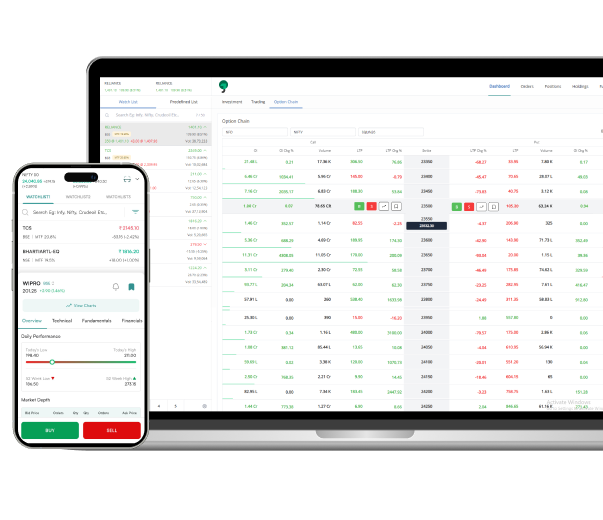
Explore our feature-rich web trading platform
Get the link to download the App