



Introduction
The Harmonized System of Nomenclature (HSN) is a globally recognized method for classifying goods. Developed by the World Customs Organization (WCO), the HSN code system standardizes product classification across countries, facilitating international trade and customs processes. In India, the HSN code plays a vital role in the Goods and Services Tax (GST) framework, impacting both tax calculation and reporting. Here’s an in-depth look at GST HSN codes and their significance.
What is the HSN Code?
HSN, short for Harmonized System of Nomenclature, is a six-digit universal code used for classifying products. The system, created by the WCO, is designed to simplify the identification and categorization of goods traded internationally. It consists of a hierarchical structure where products are classified into sections, chapters, headings, and subheadings.
HSN Code Worldwide
The HSN system is employed by over 200 countries to:
- Ensure Uniform Classification: Provides a consistent method for categorizing goods across international borders.
- Form Customs Tariffs: Helps in determining tariffs and duties applicable to different products.
- Collect International Trade Statistics: Facilitates global trade analysis by classifying over 98% of international merchandise.
GST HSN Code in India
India adopted the HSN code system for GST to streamline the taxation of goods. The HSN code is essential for determining the tax rate applicable to various products. The complexity of the code system has increased with GST, incorporating additional digits to the basic six-digit structure.
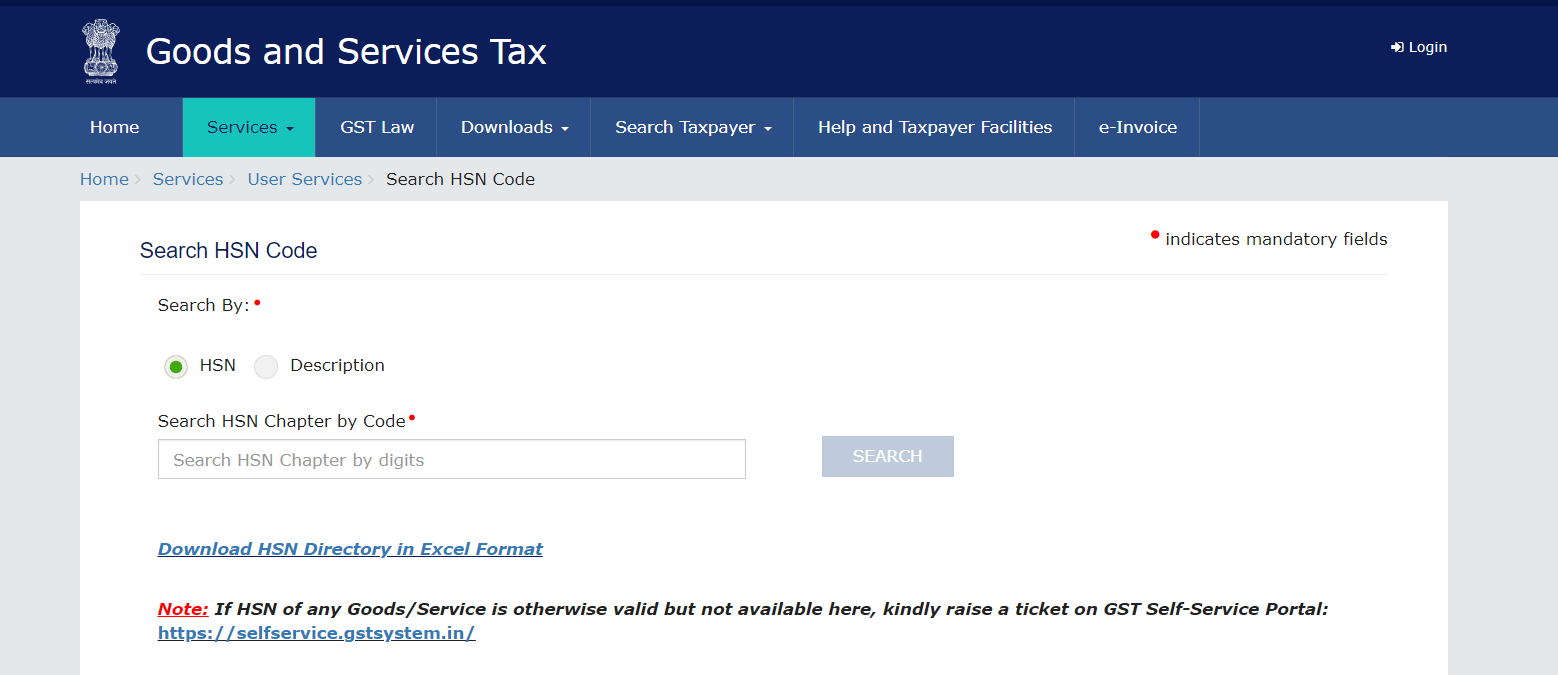
HSN Code Requirements in India:
- Turnover Below INR 1.5 Crore: No HSN code required.
- Turnover Between INR 1.5 Crore and INR 5 Crore: 2-digit HSN codes.
- Turnover Above INR 5 Crore: 4-digit HSN codes.
- Importers and Exporters: 8-digit HSN codes for detailed classification.
HSN Code List and Structure
The HSN code system is organized into:
- 21 Parts: Broad categories of goods.
- 99 Chapters: Specific categories within each part.
- 1,244 Headings: Further subdivisions within chapters.
- 5,224 Sub-Headings: Detailed classifications under headings.
Each part, chapter, heading, and subheading defines a specific type of product, ranging from raw materials to finished goods.
Examples of HSN Codes
For instance, in textiles:
- Handkerchiefs made from textile fabrics: HSN code 62.13.90.
- Handkerchiefs made from human-made fibers: HSN code 62.13.90.10.
- Silk handkerchiefs: HSN code 62.13.90.90.
This detailed classification helps in accurately reporting and taxing goods under GST.
HSN- Summary of Outward Supplies
| Chapter | Commodities |
| Section I. Animals and Animal Products | |
| Chapter 1 | Animals |
| Chapter 2 | Meat and edible offal |
| Chapter 3 | Fish, molluscs, and other aquatic invertebrates |
| Chapter 4 | Dairy produce, birds’ eggs, honey and other edible products of animal origin that are not specified anywhere else |
| Chapter 5 | Products of animal origin that are not specified elsewhere |
| Section II. Vegetables and Vegetable Products | |
| Chapter 6 | Live trees/plants, bulbs, roots, cut flowers and ornamental foliage |
| Chapter 7 | Edible vegetables/certain roots/tubers |
| Chapter 8 | Edible fruit and nuts, the peel of citrus fruits or melons |
| Chapter 9 | Tea, coffee, spices and mates |
| Chapter 10 | Cereals |
| Chapter 11 | Milling products, wheat gluten, malt, starches, inulin |
| Chapter 12 | Oil seeds and oleaginous fruits, grains, straw and fodder, seeds and fruit, and industrial or medicinal plants |
| Chapter 13 | Lac, gum, resin, extracts, etc |
| Chapter 14 | Vegetable plaiting materials/vegetable products that are not specified elsewhere |
| Section III. Animal/Vegetable Oils, their respective Cleavage Products, Waxes, Prepared Edible Fats | |
| Chapter 15 | Animal/vegetable oils, their cleavage products, etc |
| Section IV. Prepared Food, Beverages, Spirits, Tobacco and Tobacco Substitutes | |
| Chapter 16 | Preparation of meat, fish ,molluscs, etc |
| Chapter 17 | Sugar/Sugar confectionery |
| Chapter 18 | Cocoa/Cocoa preparations |
| Chapter 19 | Preparations of cereals, flour, milk, pastry products |
| Chapter 20 | Preparation of vegetables, fruits, nuts, plant parts |
| Chapter 21 | Miscellaneous edible preparations |
| Chapter 22 | Beverages, vinegar, spirits etc. |
| Chapter 23 | Residue and food waste, prepared animal fodder |
| Chapter 24 | Tobacco and tobacco substitutes that are made |
| Section V. Minerals | |
| Chapter 25 | Salt, stones, sulphur, plastering material, cement, etc |
| Chapter 26 | Ores, ash and slag |
| Chapter 27 | Mineral fuel, mineral oils, bituminous substances etc |
| Section VI. Chemical Products of Allied Industries | |
| Chapter 28 | Inorganic chemicals, organic/inorganic compounds of precious metals, isotopes, rare-earth metals, radioactive elements |
| Chapter 29 | Organic chemicals |
| Chapter 30 | Pharmaceutical Items |
| Chapter 31 | Fertilisers |
| Chapter 32 | Tanning or dyeing extracts, tannins and their derivatives, dyes, pigments, varnishes, paints, inks, etc. |
| Chapter 33 | Essential oils/resinoids, perfumery, toilet/cosmetic preparations, |
| Chapter 34 | Soap, washing preparations, organic surface-active agents, lubricating preparations, dental preparations and dental waxes with a basis of plaster, prepared waxes, artificial waxes, candles, modelling pastes, etc |
| Chapter 35 | Albuminoidal substances, glues, enzymes, etc |
| Chapter 36 | Explosives, pyrotechnic products, pyrophoric alloys, some specific combustible preparations |
| Chapter 37 | Photographic/cinematographic goods |
| Chapter 38 | Other miscellaneous chemical products |
| Section VII. Plastics, Rubber, and Articles Thereof | |
| Chapter 39 | Plastics/plastic articles |
| Chapter 40 | Rubber/rubber articles |
| Section VIII. Raw Hides/Skins/Furskins and Articles Thereof, Leather, Related Goods | |
| Chapter 41 | Raw hides/skins (other than furskins), leather |
| Chapter 42 | Articles manufactured of leather, travel goods, handbags, harnesses, articles made of animal gut (except silkworm gut) |
| Chapter 43 | Furskins/artificial fur and similar articles |
| Section IX. Wood/Wooden Articles, Wood Charcoal, Cork/Articles of Cork, Basket Ware, Manufacturers of Straw, Other Plaiting Material, etc | |
| Chapter 44 | Wood/wood charcoal/wooden articles |
| Chapter 45 | Cork and articles of cork |
| Chapter 46 | Manufactures of straw, esparto/other plaiting materials, basketware ware, etc |
| Section X. Pulp of Wood/Other Fibrous Cellulosic Material, Recovered Paper/Paperboard, and Articles Thereof | |
| Chapter 47 | Pulp of wood/other fibrous cellulosic material recovered paper or paperboard (scrap or waste) |
| Chapter 48 | Paper/paperboard, articles made of paper pulp, etc |
| Chapter 49 | Printed books, newspapers, and products of the printing industry, manuscripts, typescripts, etc |
| Section XI. Textile and Textile Articles | |
| Chapter 50 | Silk |
| Chapter 51 | Wool, fine/coarse animal hair, horse hair yarn, etc |
| Chapter 52 | Cotton |
| Chapter 53 | Paper yarn, vegetable textile fibres, woven fabrics made of paper yarn |
| Chapter 54 | Man-made filaments |
| Chapter 55 | Man-made staple fibres |
| Chapter 56 | Wadding, felt and nonwovens, cordage, twine, special yarns, ropes, etc |
| Chapter 57 | Carpets and textile floor coverings |
| Chapter 58 | Special woven fabrics, embroidery, tufted textile fabrics, trimmings, lace tapestries, |
| Chapter 59 | Covered, laminated textile fabrics, coated, textile articles made for industrial use |
| Chapter 60 | Knitted/crocheted fabrics |
| Chapter 61 | Articles of apparel and clothing accessories that are knitted or crocheted |
| Chapter 62 | Articles of apparel/clothing accessories that are not crocheted/knitted |
| Chapter 63 | Other made-up textile articles, sets, worn clothing and textile articles, and rags |
| Section XII. Footwear, Umbrellas, Walking Sticks, Headgear, Seat Sticks, Whips, Artificial Flowers, Riding Crops, Articles of Human Hair, Prepared Feathers and Similar Articles | |
| Chapter 64 | Footwear, gaiters, and the parts of such articles |
| Chapter 65 | Headgear and parts thereof |
| Chapter 66 | Umbrellas and sun umbrellas, walking sticks, riding crops and parts thereof, whips, etc |
| Chapter 67 | Prepared feathers and down and articles made thereof, articles made of human hair, artificial flowers |
| Section XIII. Articles Made of Stone, Plaster, Asbestos, Cement, Mica, Similar Materials, Glass/Glassware, Ceramic Products | |
| Chapter 68 | Articles made of stone, plaster, cement, asbestos, mica or similar materials |
| Chapter 69 | Ceramic products |
| Chapter 70 | Glass and glassware |
| Section XIV. Natural or Cultured Pearls, Precious Metals Clad With Precious Metal, Coins, Imitation Jewellery, Precious or Semi-Precious Stones | |
| Chapter 71 | Natural or cultured pearls, metals that are clad with precious metal and articles thereof, precious or semi-precious stones, imitation jewellery, coins |
| Section XV. Base Metal and Articles Made of Base Metal | |
| Chapter 72 | Iron and steel |
| Chapter 73 | Articles made of iron/steel |
| Chapter 74 | Copper and similar articles thereof |
| Chapter 75 | Nickel and similar articles thereof |
| Chapter 76 | Aluminium and similar articles thereof |
| Chapter 77 | It is Reserved for possible future use |
| Chapter 78 | Lead and articles thereof |
| Chapter 79 | Zinc and articles thereof |
| Chapter 80 | Tin and articles thereof |
| Chapter 81 | Other base metals, cermets, etc |
| Chapter 82 | Tools, cutlery of base metal, spoons and forks, implements, and parts thereof |
| Chapter 83 | Miscellaneous articles made of base metal |
| Section XVI. Machinery and Mechanical Appliances, Sound Reproducers and Recorders, Electrical Equipment and Parts Thereof, Television Image and Sound Reproducers and Recorders | |
| Chapter 84 | Nuclear reactors, boilers, machinery and mechanical appliances, etc |
| Chapter 85 | Electrical machinery and equipment, sound reproducers and recorders, sound reproducers and television image and recorders, etc |
| Section XVII. Aircraft, Vessels, Vehicles, Associated Transport Equipment | |
| Chapter 86 | Tramway/railway locomotives, tramway or railway track fixtures and fittings, rolling stock, mechanical (including electro-mechanical) traffic signalling equipment of all kinds |
| Chapter 87 | Vehicles other than tramway/railway rolling stock, etc |
| Chapter 88 | Aircraft, Spacecraft, its parts etc |
| Chapter 89 | Floating structures, ships, boats |
| Section XVIII. Optical, Photographic, Cinematographic, Measuring, Precision, Medical/Surgical Instruments/Apparatus, Musical Instruments, Clocks/Watches, etc | |
| Chapter 90 | Optical, cinematographic, photographic, checking, precision, medical/surgical instruments/apparatus, etc |
| Chapter 91 | Clocks and watches, its part etc |
| Chapter 92 | Musical instruments, its parts etc |
| Section XIX. Arms and Ammunition, its accessories | |
| Chapter 93 | Arms and ammunition, etc |
| Section XX. Miscellaneous Manufactured Articles | |
| Chapter 94 | Furniture, mattresses, bedding, cushions and similar stuffed furnishing, lamps and fittings, which are not anywhere else included, illuminated signs and name-plates, etc |
| Chapter 95 | Toys/games/sports requisites, etc |
| Chapter 96 | Miscellaneous manufactured articles |
| Section XXI. Works of Art, Collectors’ Pieces/Antiques | |
| Chapter 97 | Works of art, antiques, collectors’ pieces etc |
| Chapter 98 | Project imports, laboratory chemicals, personal imports by air or post, ship stores, passenger’s baggage |
| Chapter 99 | Services |
SAC Code
The Services Accounting Code (SAC) is used to classify services under GST. SAC codes determine the applicable GST rates for various services, which are fixed at 0%, 5%, 12%, 18%, and 28%. If services are not exempt or specifically rate-specified, the default GST rate of 18% applies.
Importance of HSN Under GST
The HSN code system standardizes the classification of goods, making GST reporting and compliance more straightforward. Key benefits include:
- Simplified Reporting: Reduces the need for detailed product descriptions in GST returns.
- Efficient Taxation: Ensures consistent application of tax rates across different regions and businesses.
- Streamlined Compliance: Facilitates automatic GST return generation and minimizes errors.
Conclusion
The GST HSN code system is integral to India’s GST framework, providing a structured method for classifying and taxing goods. By adhering to HSN codes, businesses ensure compliance with GST regulations and streamline their reporting processes. Understanding HSN codes helps in accurate tax calculation and effective business management.
Frequently Asked Questions
What is the purpose of the HSN code?
The HSN code standardizes the classification of goods, facilitating international trade, customs tariffs, and GST reporting.
How does the HSN code benefit GST filing?
HSN codes simplify GST filing by reducing the need for detailed product descriptions and ensuring consistent tax rates.
What is the difference between HSN and SAC codes?
HSN codes classify goods, while SAC codes classify services. Both systems are used to determine applicable GST rates.
Do all businesses need to use HSN codes?
Businesses with a turnover above INR 1.5 crores must use HSN codes. Smaller businesses are exempt.
How are HSN codes structured?
HSN codes are organized into sections, chapters, headings, and subheadings, each providing a detailed classification of products.
Open Free Demat Account
Related Terms
- 80EE and 80EEA
- Advance Tax Payment
- Advantages and Disadvantages of GST
- Agricultural Income
- Alternative Minimum Tax
- Banglarbhumi
- CGST
- Children Education Allowance (CEA)
- Company Registration Online
- Conveyance Allowance
- Corporate Tax
- Cost Accounting
- Dearness Allowance
- Depreciation Under Income Tax Act
- Difference Between GST and VAT
- Direct and Indirect Tax
- Dividend Distribution Tax (DDT)
- E-filing Income Tax
- E-Invoicing Under GST
- E-Way Bill Portal
- Education Cess
- Excise Duty
- Financial Year and Assessment Year
- Form 10E
- Form 10F
- Form 12B
- Form 15CA and 15CB
- Form 15H
- Form 16
- Form 16 and Form 16A
- Form 16B
- Form 16C
- Form 24Q
- Form 26AS
- Form 26Q
- Form 26QB
- Form 26QC
- Form 27Q
- Form 61A
- Goods and Services Tax (GST)
- Government GST Portal
- Gratuity Rules
- Gross Salary
- GST Amnesty Scheme
- GST Calendar 2024
- GST Composition Scheme
- GST Filing
- GST Invoice
- GST on Bikes
- GST on Cars
- GST on Cement
- GST on Electronics
- GST on Food and Restaurants
- GST on Freight Charges
- GST on Gold
- GST on Mobile Phones and Accessories
- GST on Real Estate
- GST on Transport
- GST Rates
- GST Registration
- GST Return Late Fees and Interest
- GST Seva Kendra
- GST State Code List and Jurisdiction
- GSTIN
- GSTN – Goods and Service Tax Network
- GSTR 1
- GSTR 2
- GSTR 2A
- GSTR 2B
- GSTR 3B
- GSTR 4
- GSTR 9A
- GSTR 9C
- House Rent Allowance (HRA)
- How to Generate E-Way Bill?
- IGST
- Income Certificate Online
- Income Tax
- Income Tax Act
- Income Tax for NRIs
- Income Tax for Senior Citizens
- Income Tax Helpline Number
- Income Tax Login
- Income Tax Online Payment
- Income Tax Refund
- Income Tax Return
- Income Tax Returns Filing Due Date
- Income Tax Slab
- Input Tax Credit Under GST
- Leave Encashment Tax
- Leave Travel Allowance (LTA)
- Medical Allowance
- MoA Format
- MSME Contribution
- MSME Registration in India
- MSME Schemes in India
- Payment of Gratuity Act, 1972
- Professional Tax
- Property Tax
- Repo Rate
- Residential Status Under Income Tax Act
- Reverse Charge Under GST
- Rules of Accounting
- Section 10
- Section 10(10D)
- Section 115 BAC
- Section 115BAB
- Section 12A
- Section 143(1)
- Section 148
- Section 154
- Section 16
- Section 17(5)
- Section 185
- Section 186
- Section 192A
- Section 193
- Section 194
- Section 194A
- Section 194B
- Section 194C
- Section 194D
- Section 194H
- Section 194I
- Section 194IA
- Section 194IB
- Section 194IC
- Section 194J
- Section 194K
- Section 194N
- Section 194Q
- Section 195
- Section 206AA
- Section 234F
- Section 24
- Section 40A(2)
- Section 40A(3) & Section 40A(3A)
- Section 43B
- Section 44AB
- Section 44AD
- Section 44ADA
- Section 80C
- Section 80CCC
- Section 80CCD (1) and 80CCD (2)
- Section 80CCD(1B)
- Section 80CCG
- Section 80D
- Section 80DD
- Section 80DDB
- Section 80E
- Section 80EE
- Section 80EEA
- Section 80EEB
- Section 80G and 80GGA
- Section 80GG
- Section 80TTA
- Section 80TTB
- Section 80U
- Section 87A
- Section 89A
- Section 94A
- Self Assessment Tax
- SGST
- Special Allowance
- Standard Deduction on Salary
- Tax Collected at Source (TCS)
- Tax in India
- Tax on Gifts in India
- Taxability of Perquisites
- TDS – Tax Deducted at Source
- TDS on Fixed Deposit (FD)
- TDS on Salary
- TDS Payment Due Date
- TDS Rates in India
- TDS Refund Status
- TDS Return
- TDS Traces
- TIN and TAN
- Top MSME Benefits
- Types of GST
- Value Added Tax (VAT)
- VAT and CENVAT
- VAT Registration
- VAT Return e-Filing
- What is a Debit Note, Credit Note and Revised Invoice?
- What is E-Way Bill?
- What is Form 16A?
- What is MSME
- What is TAN?
- What is the 50/30/20 Rule of Budgeting?
- Which ITR Should You File – Types of ITR Forms
Explore our feature-rich web trading platform
Get the link to download the App